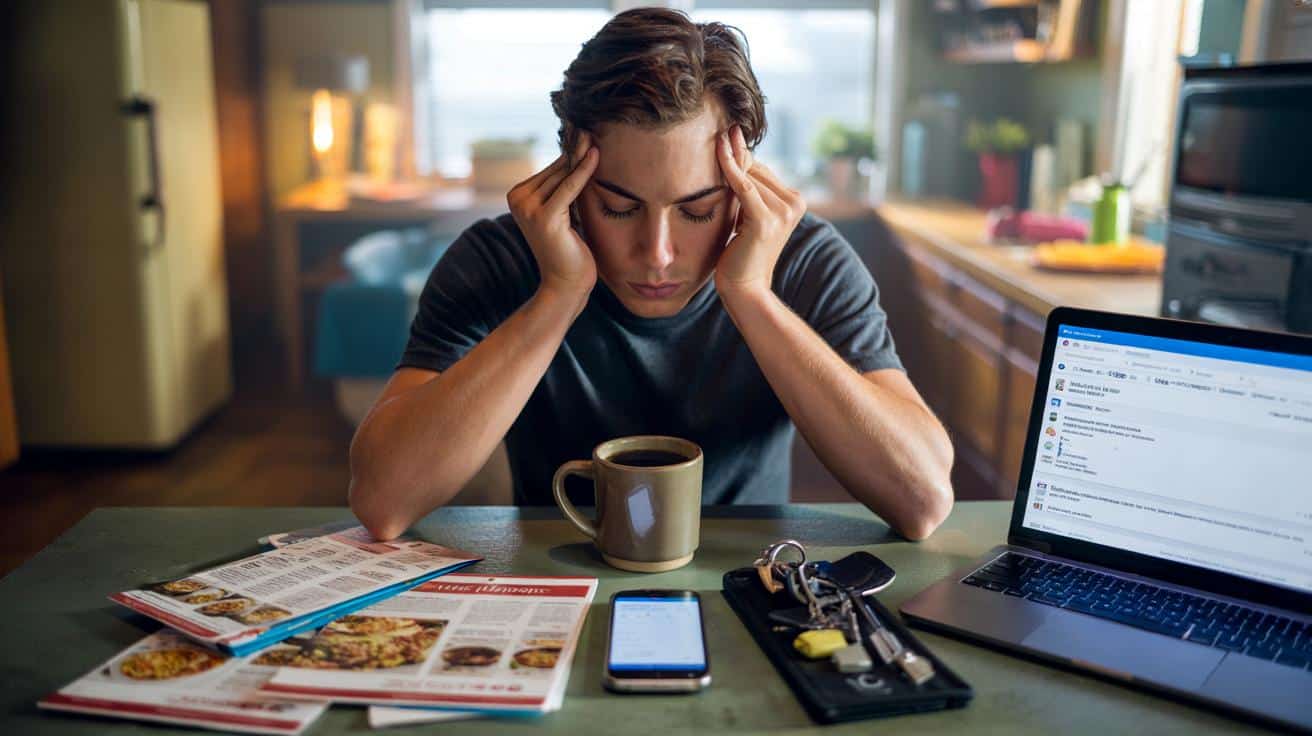
The coffee is already lukewarm when you catch yourself staring at the delivery app for the third time. Sushi or salad. You scroll, switch apps, check your bank account, go back, hesitate. It’s lunch, not a marriage proposal, and yet your chest feels tight as if you’re signing a contract for the rest of your life.
By the time you finally tap “order”, you’re not even hungry anymore. Just tired.
You close your eyes for a second and think, “Why does everything feel so hard lately?”
The emails waiting for a yes/no answer. The text from a friend asking if you’re free Friday. The choice between two perfectly similar black T-shirts in your drawer.
The day hasn’t really started, and somehow you’re already exhausted.
Something else is being spent besides time.
The hidden emotional price of every tiny choice
Some days, the decisions start before your eyes are fully open. Snooze or wake up. Shower now or coffee first. Answer that message right away or “later”. Each one seems harmless. A few seconds, a swipe, a tap.
Then you arrive at work and suddenly the air feels heavy. A spreadsheet to approve. A meeting time to pick. A project to prioritize. Small things, mostly. Yet your brain feels like an overloaded browser with twenty unclosed tabs.
You’re not lazy. Your energy is just leaking through places you don’t see.
Psychologists talk about “decision fatigue” when our mental resources run low after too many choices. On paper, the concept sounds almost abstract. In life, it can look like this:
➡️ Psychology explains why emotional awareness sometimes increases discomfort before relief
➡️ I stopped cleaning on weekends and my home stays just as clean
➡️ This small change helps you stay calm while speaking
➡️ If your phone battery dies too quickly, this hidden setting is probably the reason
➡️ People who feel pressure to maintain momentum often suppress internal signals
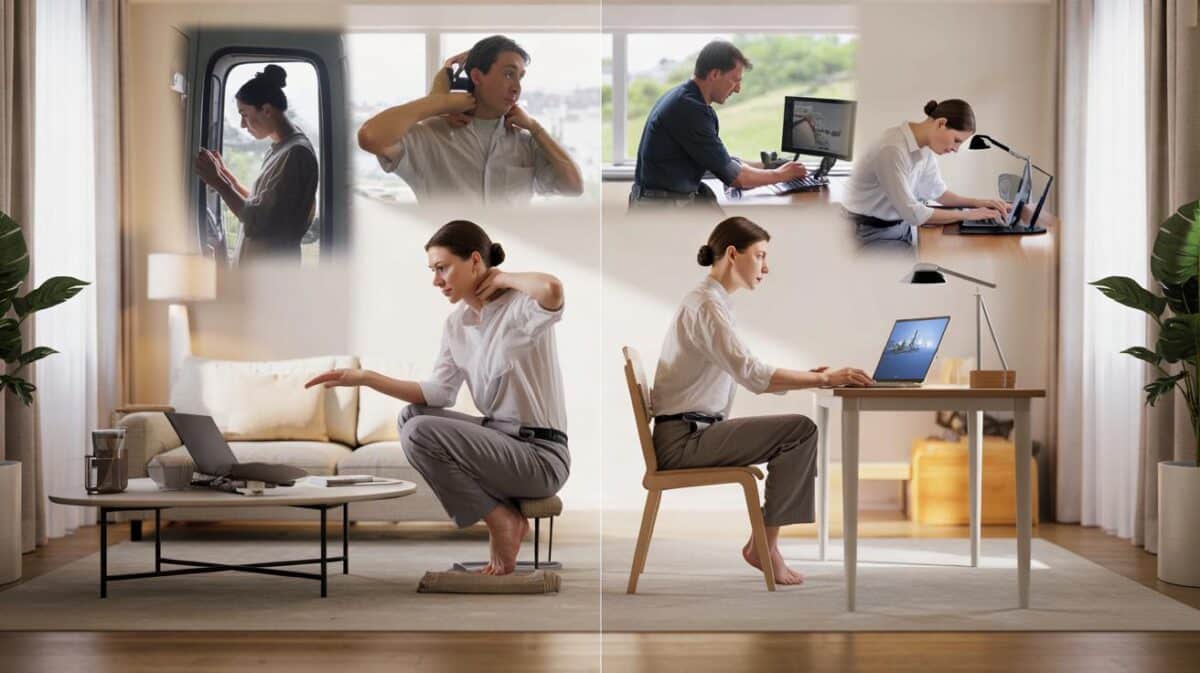
➡️ How everyday posture affects long-term comfort more than you think
➡️ How skipping small breaks during the day quietly drains your energy
➡️ Psychology explains why emotional relief doesn’t always feel pleasant
You’re in a supermarket after a long day. There are eight shelves of cereal, four types of pasta, twenty brands of yogurt. You read labels without really reading them. You walk back and forth, forgetting what you came for. Eventually, you grab something random, then go home irritated for no clear reason.
Nothing terrible happened. Yet you feel strangely defeated by a grocery store aisle.
Behind this exhaustion sits a very real emotional cost. Every decision carries a tiny dose of doubt, self-evaluation, and risk.
“Will I regret this later?”
“Will people think I’m careless?”
“Am I choosing the ‘right’ thing?”
Your brain is not just choosing what to eat or what to wear. It is protecting your identity, your sense of competence, your place in the group. That’s why by the time you reach the end of the day, you don’t only lack time. You lack self-kindness, patience, and sometimes even the will to care.
The small decisions weren’t so small after all.
When simple choices drain you, it’s rarely about the choice
One of the most helpful shifts is to treat decisions like heavy objects. You wouldn’t carry a washing machine alone up three flights of stairs “just because”. You would plan, ask for help, use tools. Your daily choices deserve the same strategy.
Start with the obvious: reduce the number of decisions you need to take when your energy is low. Decide your breakfast once for the whole week. Prepare a tiny “work uniform” of 3–4 outfits you rotate without thinking. Set default rules: the cheapest decent option, the fastest healthy option, the option you chose last time that went fine.
You’re not being boring. You’re buying back mental space.
Many people feel guilty about this. They hear advice about “living intentionally” and think they must weigh every choice as if they were designing a rocket. Then they wonder why they’re so tired by 3 p.m.
Let’s be honest: nobody really does this every single day.
The truth is, your brain loves shortcuts. The more micro-decisions you turn into simple routines, the more emotional fuel you free up for the few choices that actually matter to you. The mistake is believing that every decision needs your full emotional involvement. Most don’t. A few truly do.
Your energy belongs to that second category.
There is also a softer, more uncomfortable dimension. Some of the exhaustion does not come from the number of decisions, but from the fear around them. Fear of disappointing. Fear of missing out. Fear of finally having to choose yourself.
*“Simple decisions aren’t simple when you’re scared of being wrong all the time.”*
When you feel that familiar tightness in your chest over another tiny choice, try this small inner script:
- Ask yourself: “What’s the worst realistic outcome if I choose A or B?”
- Limit your time: give the decision 2 minutes, not 20.
- Choose what feels “good enough”, not perfect.
- Promise yourself: “If this really doesn’t work, I can change it later.”
- Take three breaths after deciding, to teach your body that it is safe.
These are not magic tricks. They’re small ways to bring your nervous system back into the room with you.
You’re not indecisive, you’re overloaded
Once you see the emotional tax hidden in your day, it becomes hard to unsee it. You notice that the hardest moments are rarely the big turning points. They’re the afternoons where three people ask you “Can you just choose?” and your brain screams “No”.
You might start questioning the story you tell yourself: “I’m so indecisive.” What if the story were less dramatic, and more factual: “My decision muscle is overused and under-rested.”
From there, different questions appear. Which decisions are actually mine to take? Which ones could be shared, delegated, or automated? Which ones am I stretching out because being “undecided” feels safer than owning a choice?
There’s also the social side. Many of us grew up in families or workplaces where changing your mind was treated like a failure. So we freeze. We hold every small decision as if it were carved in stone. No wonder it feels terrifying.
Giving yourself the right to adjust later reduces the emotional weight of now. Saying “For the next three months, I’ll try X” is very different from “This is what I must do forever.”
Sometimes the bravest move is not a perfect decision. It’s a “good enough for now” decision taken with a kind voice in your head.
Research in psychology keeps repeating one simple, slightly annoying truth: your mental energy is limited, whether you like it or not. That doesn’t make you weak. That makes you human.
We’ve all been there, that moment when choosing between two types of cheese feels like a metaphor for your entire life.
If you feel drained by simple decisions, you’re not failing at adulthood. You’re bumping into the limits of a brain that was not designed for hundreds of micro-choices a day, constant notifications, and social pressure to “optimize” everything.
- Protect your mornings for as few decisions as possible.
- Turn recurring choices into rituals instead of fresh dilemmas.
- Notice when fear, not complexity, is making a choice feel huge.
Once you see the emotional cost, you can start spending your energy on purpose, not by accident.
Leaving space for the decisions that deserve you
The next time you feel that wave of exhaustion from choosing a sandwich or a meeting time, pause for a second. Not to judge yourself, but to observe.
“Am I really tired of this decision? Or am I tired of all the tiny ways I’ve been doubting myself today?”
That single question can shift the whole frame. Because underneath the menu, or the spreadsheet, or the text message, there is a quiet relationship: you, with your own judgment. Every choice is a small referendum on whether you trust yourself. No wonder it stings when the trust has been worn thin.
You don’t have to solve this in one perfect move. You can start with one slice of your life. Maybe mornings. Maybe social plans. Maybe work emails after 6 p.m.
Choose one area where you’ll create a gentle rule, a default setting, a bit of structure that protects you from twenty micro-decisions. Tell a friend or partner about it so they can support you rather than add more options.
Little by little, your day stops feeling like a multiple-choice test. It becomes more like a path with a few clear crossroads, and long stretches where you can just walk, breathe, look around.
When people talk about “taking care of themselves”, they often think of bubble baths or yoga classes. Those can be nice. But the deep self-care might look quieter: refusing to spend your emotional energy on choosing between practically identical options, so you can save that energy for the moments that truly change your life.
You are allowed to make some decisions automatic, some imperfect, and some slow and sacred. You are allowed to be tired. You are also allowed to build a life where your tiredness makes more sense.
The question that lingers, long after the lunch order and the laundry choices, is simple: if your daily decisions all have a price, which ones are actually worth what they cost you?
| Key point | Detail | Value for the reader |
|---|---|---|
| Decision fatigue is emotional | Each choice carries doubt, fear of regret, and self-evaluation | Normalizes exhaustion and reduces shame around “simple” decisions |
| Defaults protect your energy | Routines for food, clothes, and small tasks cut daily choice overload | Gives practical levers to feel less drained without major life changes |
| “Good enough” beats “perfect” | Time-limited, adjustable decisions lighten emotional pressure | Helps readers act sooner and trust themselves more often |
FAQ:
- Why do tiny decisions make me so tired?Because your brain doesn’t just compare options, it also manages fear of regret, social pressure, and self-judgment, which quietly drains your emotional energy.
- How do I know if it’s decision fatigue or something more serious?If the exhaustion is constant, affects sleep, appetite, or joy for weeks, or comes with deep sadness or anxiety, it’s worth talking to a doctor or therapist, not just adjusting routines.
- Is using routines and defaults being lazy?Not at all; it’s a mental strategy used by many high-performing people to save focus for the choices that truly matter.
- What can I do in the moment when I feel overwhelmed by a choice?Set a short time limit, define what “good enough” looks like, pick an option, then take a few slow breaths to calm your body instead of rethinking it endlessly.
- How many decisions should I try to automate?Start with just one or two recurring areas, like breakfast or work outfits, and see how much lighter your day feels before changing anything else.