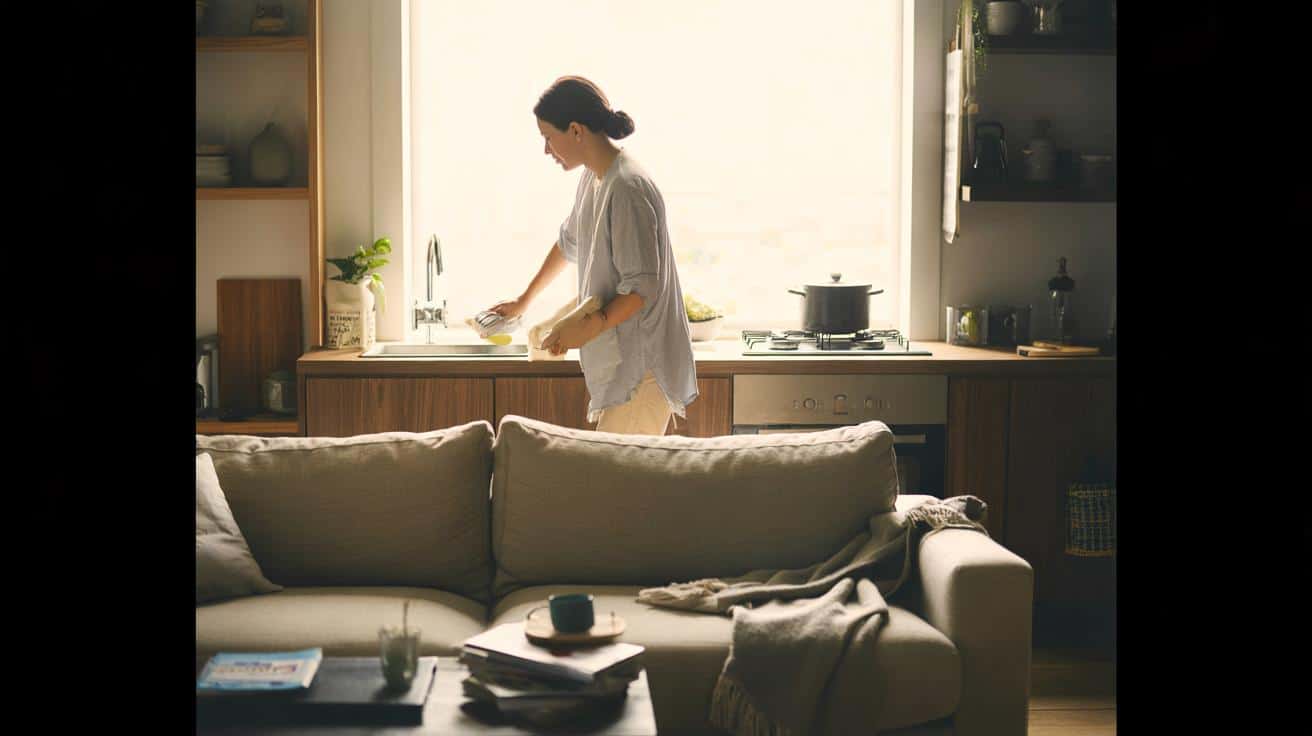
Saturday mornings used to start with the same soundtrack at my place: vacuum roaring, washing machine humming, someone yelling “Where’s the glass cleaner?” over the radio. By 10 a.m., my living room looked like an aisle at a supermarket cleaning demo, and my mood matched the dirty mop water in the bucket. Friends would send, “Brunch?” and I’d stare at my rubber gloves, already feeling behind before the weekend had even started.
One Sunday night, exhausted and vaguely resentful of my own sofa, I caught myself thinking: I spent my free time scrubbing surfaces I barely noticed.
The next week, I tried something that felt almost rebellious.
I stopped cleaning on weekends.
How my home stayed clean when I stopped “Weekend Cleaning Mode”
The first Saturday I didn’t clean, I woke up with a strange mix of guilt and freedom. No to-do list taped to the fridge, no mental countdown before guests arrived, no desperate sweep of crumbs right before lunch. I made coffee and actually sat down. The mess? It wasn’t the disaster I’d imagined.
The cushions were a bit crooked. A few shoes by the door. A light film of dust on the TV stand that I only noticed because I went looking for it.
The place felt lived in, not neglected.
The real surprise came two weeks later. I’d banned myself from “weekend cleaning sprees”, but I hadn’t decided to live in chaos. On Tuesday, I wiped the bathroom sink while my skincare serum dried. On Wednesday, I ran the vacuum in just the hallway and living room while waiting for pasta water to boil. On Thursday, I tossed a load of laundry in before bed instead of scrolling my phone.
None of these moments felt like “cleaning days”. They were just tiny actions stitched into an ordinary week.
By Friday night, the apartment looked almost exactly like it used to after a full Saturday of scrubbing.
➡️ How skipping small breaks during the day quietly drains your energy
➡️ Psychology explains why emotional safety matters more than logic under stress
➡️ People who prefer solitude often process emotions more deeply, psychology suggests
➡️ Psychology explains why emotional relief doesn’t always feel pleasant
➡️ How everyday posture affects long-term comfort more than you think
➡️ If you feel drained by simple decisions, psychology explains the hidden emotional cost
➡️ This small change helps you stay calm while speaking
➡️ People who feel pressure to maintain momentum often suppress internal signals
What changed wasn’t the level of cleanliness. It was the rhythm. When all the work was packed into two precious weekend days, every sock on the floor felt like an insult. Every crumb became evidence that I was losing control. Spreading the same tasks over the week made them shrink.
Psychologists talk about “all-or-nothing thinking”. That’s exactly what weekend cleaning encourages: you’re either on top of your home or drowning in it.
Once I dropped that mindset, I saw what was really happening. My house didn’t need a six-hour deep clean every Saturday. It needed 10-minute reality checks, every day or so.
The simple weekly rhythm that replaced my weekend cleaning
The “method” I use now would probably disappoint any extreme organization influencer. It fits on a sticky note. I divided my home into rough zones and paired each one with a normal weekday activity. Kitchen goes with cooking. Bathroom goes with shower time. Living room with TV time. Bedroom with getting dressed or undressed.
Then I gave each weekday one light focus. Monday: living room. Tuesday: bathroom. Wednesday: bedroom. Thursday: kitchen. Friday: catch-up or nothing at all.
No stopwatch, no giant chart. Just one question: “What’s the one thing I can reset in this space today?”
On a typical Tuesday, I’ll step out of the shower and spend three tiny minutes wiping the sink and mirror with a microfiber cloth and whatever spray is closest. If the towel looks tired, it goes straight into the laundry basket. Maybe once every few weeks, I’ll quickly scrub the toilet before bed. That’s “bathroom day”.
On Wednesday, I might change the sheets in the morning, then in the evening do a 60-second “clothes amnesty”: all the abandoned t-shirts and jeans get thrown back into the closet in vaguely the right place. It’s not Instagram-worthy folding. It’s “things are off the chair and I can see the floor” worthy.
Let’s be honest: nobody really does this every single day. Some weeks I skip a day or two and nothing awful happens.
The biggest trap I used to fall into was perfection. I’d start “just tidying the sofa” on a Saturday, then suddenly I’d be reorganizing bookshelves, washing throw pillow covers, and googling “best way to clean grout”. Three hours gone, and I still felt behind because I hadn’t reached the bedroom yet.
Now, the rule is simple: my daily job is to reset, not renovate. That means stacking things, not sorting them by color. Wiping, not whitening. Tossing five obvious items, not redesigning the entire storage system.
We’ve all been there, that moment when you decide you’re going to “finally get on top of the house” and three days later it looks the same, you’re exhausted, and you secretly hate everyone’s shoes.
Sometimes I think the cleanest thing I did was stop believing my home had to look like nobody lived there. Once that pressure dropped, I started seeing what was actually enough. My home didn’t suddenly become tidier because I’m more disciplined now. It became easier to keep tidy because I lowered the bar from “show home” to “comfortable, clean-ish, and calm”.
- One room, one reset: Pick just one space each weekday and give it 5–15 minutes, max.
- Visible first: Focus on surfaces you see constantly – kitchen counters, coffee table, bathroom sink.
- Micro-tasks: Pair small jobs with habits you already have – brushing teeth, boiling water, watching TV.
- Weekend rules: Use Saturday and Sunday for maintenance only – quick dishes, obvious clutter, nothing heavy.
- Good enough is the goal: Aim for “I can relax here”, not “I could host a magazine shoot”.
What I gained when I gave my weekends back
These days, my weekends feel very different. I still wash a few plates after breakfast, still hang a towel, still toss crumbs in the bin. Life leaves traces, and I’m not pretending otherwise. What’s gone is that heavy, invisible obligation that used to sit on my shoulder from Friday night onwards, whispering, “You haven’t done the bathroom yet.”
Now, when someone suggests a last-minute coffee or a long walk, I don’t mentally negotiate with a dustpan. I go. The house will still be standing on Monday.
The more I talk about this rhythm with friends, the more secrets tumble out. One admits she only really cleans the parts of the floor you can see. Another says her “weekly vacuum” is more like “when I can see dog hair in the sunlight”. Someone else confesses she only irons clothes if people outside the family are going to see them.
*There’s a big gap between the cleanliness we think everyone else maintains and what actually happens behind closed doors.*
Once you realize that, giving up weekend cleaning stops feeling lazy and starts feeling like a quiet, rational rebellion.
If you’ve been stuck in that cycle of “ruined Saturday, sparkling bathroom, lingering resentment”, maybe this is your sign to try a week without the big clean. Let the house be average for a few days. Slide little resets into your evenings. Notice what you actually care about and what was just habit or guilt from someone else’s standards.
You might discover your place doesn’t need more hours of work.
It just needs less pressure wrapped around the hours you already give it.
| Key point | Detail | Value for the reader |
|---|---|---|
| Shift from weekend marathons to weekday “micro-resets” | 5–15 minutes a day tied to existing habits instead of multi-hour Saturday sessions | Reduces overwhelm and frees up weekends without sacrificing cleanliness |
| Focus on visible, high-traffic areas | Kitchen counters, bathroom sink, living room surfaces get priority | Makes the home feel cleaner fast with less effort |
| Redefine “clean enough” | Aim for lived-in but orderly, not perfection or show-home standards | Lowers stress and guilt, and makes routines more realistic and sustainable |
FAQ:
- Question 1Won’t my home slowly get dirtier if I stop weekend deep cleans?
As long as you spread light tasks over the week, the opposite tends to happen. Regular small resets prevent the kind of buildup that demands a heavy deep clean.- Question 2What if I have kids or pets and the mess never stops?
Shorten the tasks, not the standard. Think 3-minute pickups and quick wipes in the main zones, and get kids involved with simple jobs like toy baskets or shoe corners.- Question 3How do I start if my home is already very messy?
Begin with one room you use most. Do a single “reset session” there, then switch to the weekday micro-routine to keep it from sliding back while you slowly tackle other spaces.- Question 4Is it okay to still clean sometimes on weekends?
Of course. The idea isn’t a strict ban, it’s dropping the expectation that weekends must be cleaning marathons. Use them for light maintenance or when it genuinely suits you.- Question 5What if I actually enjoy big cleaning sessions?
Then keep the parts you love and shrink the rest. Do your satisfying deep dive once a month, and rely on small daily habits to handle the boring, repetitive jobs.