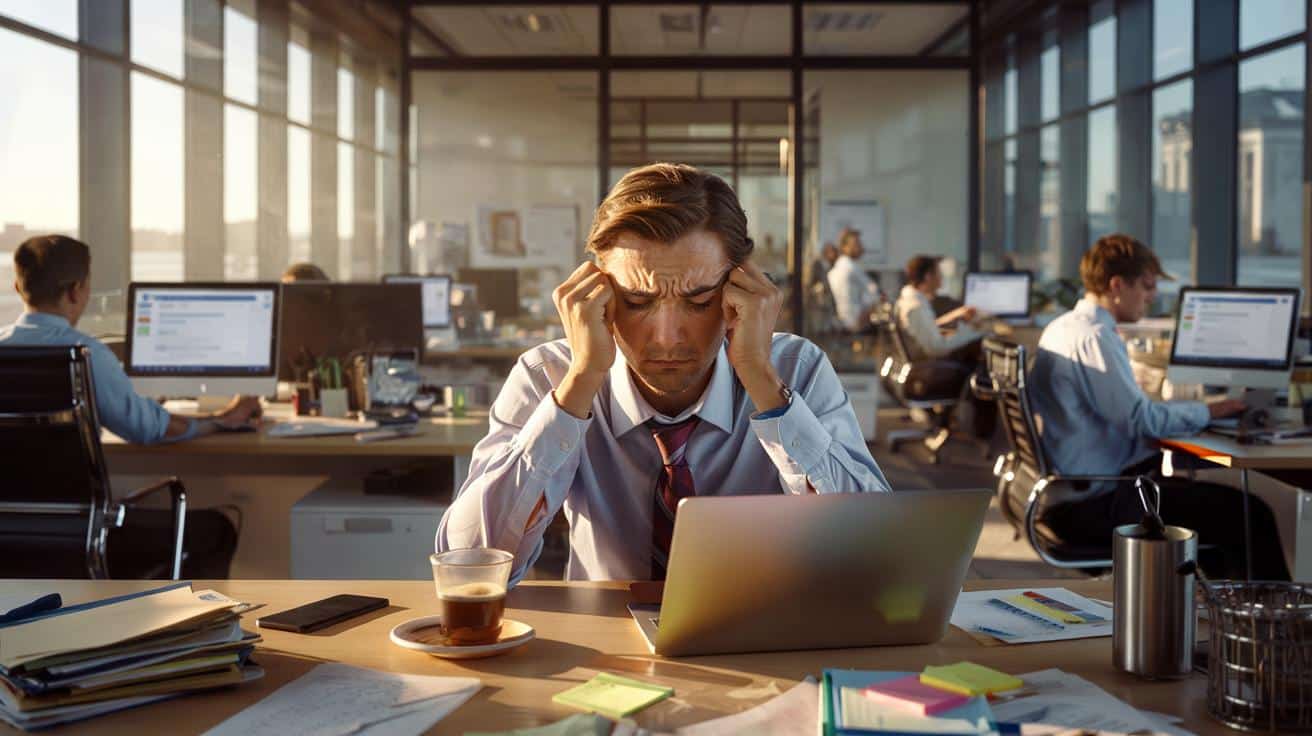
The cursor blinks on the screen, the coffee’s gone cold, and your shoulders feel like they belong to someone twenty years older. You tell yourself you’ll get up after this email. Then after the next one. Then after you “just finish this one last thing.” Hours slide by in a weird tunnel where your brain feels both wired and dull, like a light buzzing in an empty office.
At the end of the day you’re wiped out, yet you can’t explain why. You didn’t run a marathon. You barely moved.
Something small went missing, over and over, all day long.
Why skipping tiny breaks quietly exhausts you
Watch any open-plan office, café, or home desk at 11:23 a.m. and you’ll notice the same scene. People hunched over screens, jaw clenched, fingers moving fast, eyes not blinking enough. The common pattern isn’t the workload. It’s the refusal to pause.
Those micro-moments where we could lean back, stretch, look away from the screen for thirty seconds? We trade them for “productivity”. We shave off tiny breaks like they’re fat, not noticing we’re carving into muscle. By 3 p.m., the collective mood has dipped, and everyone wonders why their brain feels thick as syrup.
Take Maya, a project manager who swears she “doesn’t have time” for breaks. Her day is a spreadsheet of back-to-back calls, Slack messages, and urgent emails. She eats lunch at her desk, scrolling through updates with one hand, fork in the other.
For weeks she’s been waking up already tired. By late afternoon, she rereads the same sentence three times. Little mistakes creep into her work. She drinks more coffee, pushes a bit harder, stays a bit later. On paper, she’s “always on.” Inside, she feels strangely hollowed out.
Nothing dramatic happened. She just didn’t step away. Not once.
Skipping small breaks doesn’t just cost you comfort. It trains your brain to stay in a low-level emergency state. Your nervous system never gets that micro-signal that says, “We’re safe, we can release the tension now.”
Your eyes stay locked, your breathing stays shallow, your body quietly burns through its reserves. Attention becomes a tight, narrow beam instead of a flexible spotlight. Decision fatigue hits sooner. Creativity dries up. *Over time, the constant grind without air pockets starts to feel like your default personality: tired, irritable, “not a morning person,” “not an afternoon person either.”*
➡️ If your phone battery dies too quickly, this hidden setting is probably the reason
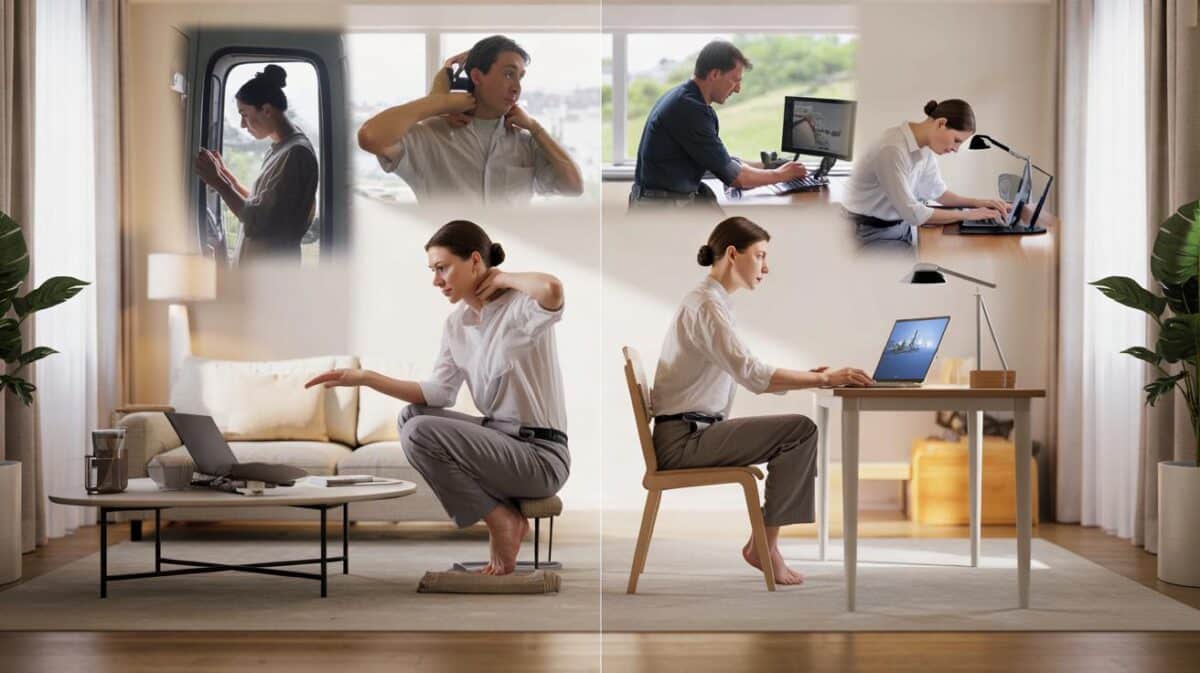
➡️ How everyday posture affects long-term comfort more than you think
➡️ I stopped cleaning on weekends and my home stays just as clean
➡️ Psychology explains why emotional safety matters more than logic under stress
➡️ People who feel pressure to maintain momentum often suppress internal signals
➡️ Psychology explains why emotional relief doesn’t always feel pleasant
➡️ This small change helps you stay calm while speaking
➡️ Psychology explains why emotional awareness sometimes increases discomfort before relief
How to take real breaks that actually recharge you
The most effective breaks are embarrassingly small. Think 60 seconds to stand up and roll your shoulders. Two minutes to look out the window and let your eyes focus on something far away. Three slow inhales before opening a new tab.
A simple method: for every 25–30 minutes of focused work, give yourself a 2–5 minute mini-reset. No phone, no “catching up” on messages. Just step away from whatever you’re doing. Stretch your neck. Walk to the kitchen. Sip water and do absolutely nothing productive. One song, one slow lap around the room, one deep yawn. That’s all.
A common trap is turning breaks into another performance. You open Instagram “just for a second,” and ten minutes later your brain feels even noisier. Or you tell yourself that a break only “counts” if you do yoga, meditate, drink green tea, and journal your feelings. Let’s be honest: nobody really does this every single day.
Start where you are. If all you can manage is standing up and shaking your hands for 30 seconds, that still interrupts the exhaustion spiral. Be kind about the days you forget. Skipping one break isn’t failure. The real win is noticing you’ve been sitting too long and deciding, right then, to give yourself a pause.
Our energy doesn’t vanish in one big crash; it leaks out in tiny moments where we deny ourselves rest.
- Stand up every 30–45 minutes, even if just to change posture.
- Look away from your screen and focus on a distant point for 20 seconds.
- Take 3–5 slow breaths before starting a new task or call.
- Use physical cues: drink water, stretch your wrists, roll your ankles.
- Protect at least one “real” 10–15 minute break with no screens at all.
The quiet power of treating breaks as non‑negotiable
The real shift comes when breaks stop being a guilty pleasure and start being part of your work, like hitting “save” so your file doesn’t crash. When you see pauses as maintenance, not laziness, your whole relationship with energy changes.
You notice how different decisions feel after 90 seconds of breathing. You feel how your back loosens after walking to fill a glass of water. You realize that tasks take less time when your brain isn’t dragging a ton of invisible fatigue behind it. Small breaks stop looking like lost minutes and start feeling like reclaimed hours.
| Key point | Detail | Value for the reader |
|---|---|---|
| Micro-breaks protect focus | Short, regular pauses prevent mental fog and decision fatigue | Work feels lighter and you make fewer errors |
| Physical movement resets energy | Standing, stretching, and walking break the “frozen at the desk” posture | Less tension, fewer aches, and more stable energy across the day |
| Screen-free pauses calm the brain | Moments without notifications lower stress and re-center attention | Better mood, more creativity, and a clearer sense of priorities |
FAQ:
- Question 1How often should I take a break during the day?
- Question 2What’s the minimum length for a useful break?
- Question 3Are phone scrolls or social media real breaks?
- Question 4What if my job doesn’t allow frequent pauses?
- Question 5How can I remember to take breaks when I’m busy?