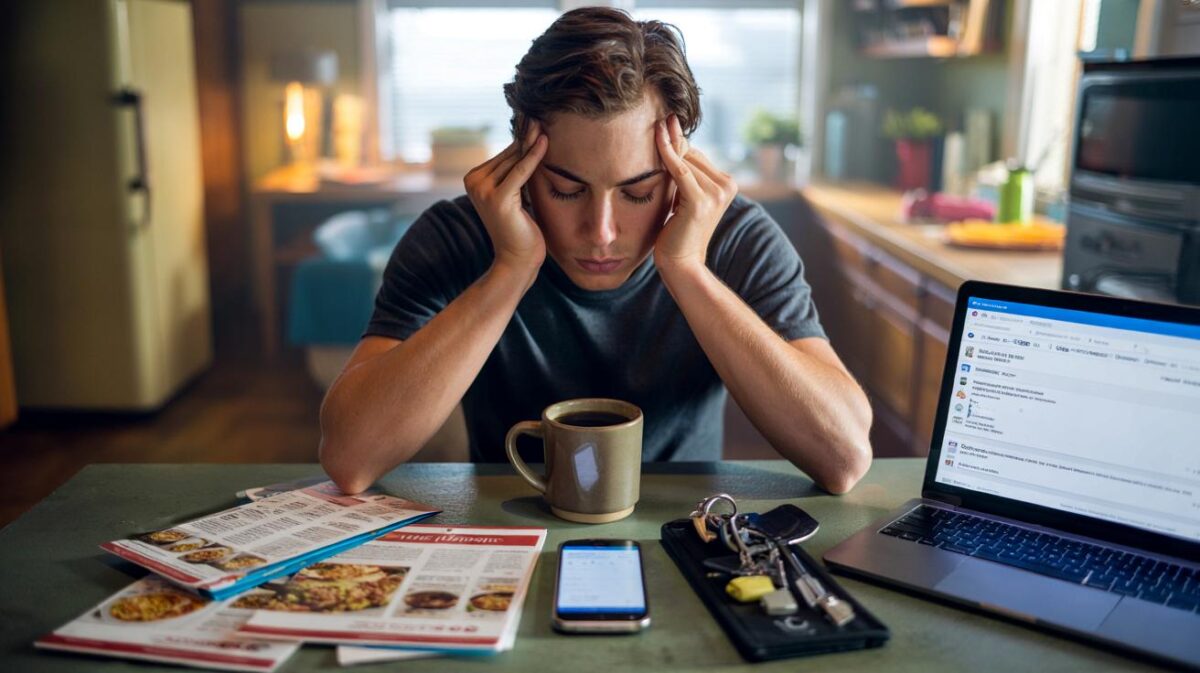
The argument started with something that didn’t matter. A dirty mug on the counter, a late text reply, the kind of tiny spark you barely notice until the room is on fire. Voices rose. One person laid out the facts like a lawyer, all bullet points and cold logic. The other froze, eyes glossy, body turned slightly away as if bracing for a punch that wouldn’t come. Technically, nothing cruel was said. On paper, it was a “rational discussion.”
But when it was over, both of them sat in separate rooms, scrolling aimlessly, not quite sure why they felt so shaky and alone.
The logic had been flawless.
The damage was real.
When your nervous system hijacks the conversation
Under stress, we like to imagine we become sharper, more focused, more “on it.”
What really happens is much messier. Your heart races, your muscles tense, and your brain silently shifts resources from the prefrontal cortex (the logical, planning part) to the survival circuits that scan for threat. You think you’re debating; your body thinks you’re in danger.
In that state, emotional safety isn’t a luxury.
It’s the only thing that keeps your thinking brain online long enough to actually use logic.
Picture a manager calling an “urgent meeting” after a bad quarterly result. They stride in with graphs, spreadsheets, and a rehearsed speech about targets and responsibility. Their tone is clipped. Jokes are absent. One person asks a question, gets a sharp reply, and falls silent.
The room looks attentive.
Nobody interrupts. Nobody pushes back. Someone is even taking notes. Yet later, when the manager wonders why no one implemented the brilliant recovery plan, the answer is simple: everyone was too busy trying not to get blamed to actually think creatively. Emotional safety was gone, so innovation left the room with it.
Psychologists describe this with a simple idea: when the brain detects social threat, it reacts almost the same way it does to physical danger. Rejection, criticism, contempt — they light up many of the same regions as actual pain.
That doesn’t mean people turn irrational. It means the priority quietly changes from “solve this problem” to “protect myself.” Logical arguments start to feel like attacks. Even gentle questions can sound like traps. *The nervous system starts whispering: they’re not safe, get out, shut down, defend.*
This is why emotional safety beats clever reasoning in any high-stress moment. Without safety, logic is just noise bouncing off a locked door.
➡️ If your phone battery dies too quickly, this hidden setting is probably the reason
➡️ If you feel drained by simple decisions, psychology explains the hidden emotional cost
➡️ Psychology explains why emotional awareness sometimes increases discomfort before relief
➡️ Psychology explains why emotional relief doesn’t always feel pleasant
➡️ People who feel pressure to maintain momentum often suppress internal signals
➡️ This small change helps you stay calm while speaking
➡️ People who prefer solitude often process emotions more deeply, psychology suggests
➡️ How skipping small breaks during the day quietly drains your energy
How to create emotional safety when stress is sky-high
One of the simplest tools psychologists suggest is to name the tension out loud, calmly and without blame. Something like: “I notice we’re both getting tense. I care about you and I don’t want this to turn into a fight.”
That kind of sentence does two quiet things. It says, “You’re not my enemy,” and, “Your feelings matter more than winning this point.” The brain hears that and starts to lower the internal alarm. Breathing slows a little. Shoulders drop a few millimeters.
It’s not magic. But it gives logic a fighting chance to re-enter the conversation.
A lot of us do the opposite. We double down on arguments just when the other person’s nervous system is slamming doors. We talk faster, stack more evidence, repeat ourselves louder. Then we’re confused when the person either explodes or goes silent.
This doesn’t mean you have to tiptoe or swallow every frustration. It means you read the emotional temperature first. Is the person already flooded — bright red face, clenched jaw, glassy stare, one-word answers? That’s not a “reason with them” moment. That’s a “pause, slow your tone, ask if they need a break” moment. Let’s be honest: nobody really does this every single day.
But the ones who try, even clumsily, usually argue less and connect more.
“Under stress, people don’t remember what you said. They remember how safe they felt while you were saying it.”
- Slow your voice first
If your tone softens and your pace drops, the other person’s nervous system gets a subtle cue that danger is easing. - Use one validating phrase
- Offer a tiny choice
“I get that this is really stressful” or “I can see why you’re upset” tells the brain: I’m seen, not attacked.
“Do you want to talk about this now or after dinner?” A small choice restores a sense of control, which is a pillar of emotional safety.
Why this matters more than being right
Emotional safety doesn’t mean avoiding conflict, pretending everything is fine or walking on eggshells. It means you can disagree without fearing humiliation, punishment or abandonment. That’s true at home, at work, with friends, even in how you talk to yourself.
When people feel safe, they admit mistakes faster. They share half-formed ideas. They tell you the truth sooner, before resentment hardens into distance. Logic starts working again not because people got smarter, but because their nervous system left survival mode.
Think about the last time you felt genuinely heard while you were upset. Maybe a friend said, “Stay on the phone, I’m here,” instead of giving you a five-step plan to fix everything. Maybe a colleague closed their laptop, turned fully toward you, and said, “Walk me through what happened, no rush.”
Those moments stick. They repair something small and invisible. They also change the next argument, because some quiet part of you remembers: under pressure, this person tends to protect our connection, not just their logic. That memory alone lowers the next wave of stress.
This is where the plain truth sits: **logic without safety rarely changes anyone’s mind**. You can send them articles, charts, evidence. You can be technically correct on every point. If their body is screaming “unsafe,” all your facts land like stones.
Emotional safety is not soft, sentimental work. It’s strategic. It’s grounded in how the human brain is wired. And it starts with small, unglamorous habits — breathing before replying, naming your own feelings instead of accusing, asking, “Do you feel attacked right now?” and being willing to hear “yes.”
The conversation you save might be your own.
| Key point | Detail | Value for the reader |
|---|---|---|
| Emotional safety keeps logic online | Under stress, the brain shifts from rational thinking to threat protection unless it feels safe | Helps you understand why “being reasonable” fails in heated moments |
| Small signals change the whole tone | Slower voice, validation, and tiny choices reduce perceived threat | Gives you simple, usable tools to calm tense conversations |
| Safety beats being right | Without safety, facts feel like attacks and people shut down or defend | Shows why protecting the relationship often leads to better outcomes |
FAQ:
- Question 1Is emotional safety just about being “nice” all the time?Not at all. Emotional safety is about respect and security, not endless politeness. You can set firm boundaries, disagree strongly and still signal: “You’re not in danger with me.”
- Question 2What if the other person doesn’t care about my feelings?You still benefit from regulating your own stress response. You can speak more clearly, decide more calmly and walk away sooner from truly unsafe dynamics.
- Question 3Can emotional safety be built in a toxic workplace?Sometimes on a small scale. You might not change the whole culture, but you can build pockets of safety with specific colleagues or within your own team.
- Question 4How do I know if I feel emotionally safe with someone?Notice your body. Can you admit a mistake without panicking? Can you say “I disagree” and still relax your shoulders? That’s a good sign.
- Question 5What’s one first step to create more safety at home?Pick one recurring argument and agree with the other person to pause the next time voices rise. Use that pause to say what you feel, not what they’re doing wrong.