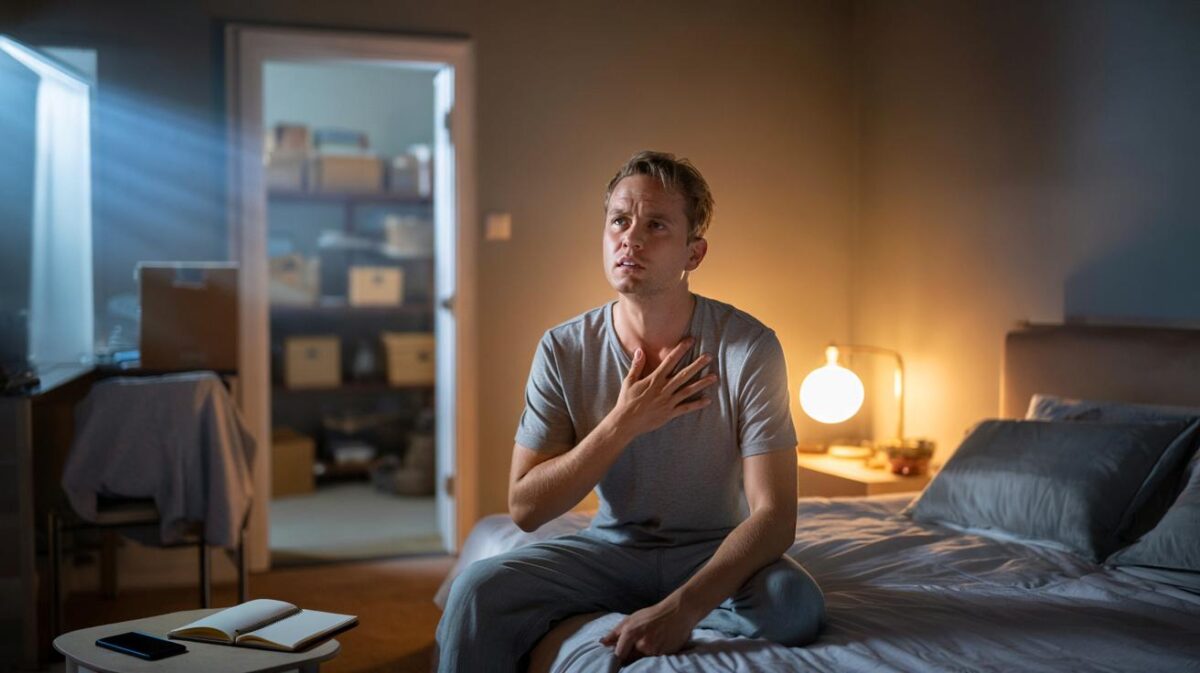
The room was full, but Ava sat pressed against the wall, tracing the rim of her glass with one finger. People laughed in clumps of three and four, phones flashing, music just a little too loud. Every few minutes someone would sweep past her with a quick, “You okay? Come dance!” and she’d smile, nod, and stay right where she was.
What nobody saw was the storm of thoughts running underneath that quiet smile. Every joke, every sharp tone, every side glance, her brain was cataloguing, replaying, interpreting. She’d go home later and lie awake, replaying the whole night as if it were a movie she’d been paid to review.
Some people see someone like Ava and think: shy, distant, uninterested.
Psychology is starting to tell a very different story.
Why people who love solitude often feel everything more
If you’ve ever preferred the empty park bench to the crowded bar, you probably know the strange mix of peace and intensity that comes with it. On the surface, solitude looks calm. Inside, it can feel like standing under a waterfall of feelings.
Psychologists have found that people who seek out alone time often show higher levels of self-reflection and emotional awareness. They don’t just feel things, they dissect them. That quiet late-night walk isn’t just “getting some air”. It’s an internal debriefing.
For many, distance from others isn’t about coldness. It’s about having the space to process what everyone else rushes past.
Take Leo, 29, who loves his friends but dreads group trips. Last summer, on a weekend getaway, he ended up hiding in the bathroom after dinner, staring at the tiles just to catch his breath.
He told me later that it wasn’t social anxiety in the classic sense. He wasn’t afraid people would judge him. He was overwhelmed by the emotional noise. Every argument, every moment someone felt ignored, every tiny tension in the air, he absorbed it like a sponge.
Back home, he took two full days alone to “come down” from what his friends thought was just a fun, easy weekend. For Leo, it felt like three months of emotional data compressed into 48 hours.
➡️ I stopped cleaning on weekends and my home stays just as clean
➡️ Psychology explains why emotional relief doesn’t always feel pleasant
➡️ How skipping small breaks during the day quietly drains your energy
➡️ How everyday posture affects long-term comfort more than you think
➡️ If you feel drained by simple decisions, psychology explains the hidden emotional cost
➡️ This small change helps you stay calm while speaking
➡️ Psychology explains why emotional awareness sometimes increases discomfort before relief
➡️ If your phone battery dies too quickly, this hidden setting is probably the reason
Psychology has a name for part of this: higher sensory and emotional sensitivity. People who enjoy solitude are often more attuned to subtle cues, from micro-expressions to tone shifts to their own inner reactions.
That constant attunement creates richness, but also fatigue. Their nervous system doesn’t simply note “someone’s upset”; it starts tracing threads. Why are they upset? What does that remind me of? What does this mean for our relationship?
This is why silence can feel like oxygen. It gives the brain time to file all those impressions instead of drowning in them. *Solitude becomes less about escape and more about integration.*
How to live with deep emotional processing without burning out
One simple but powerful method is what some therapists call “scheduled solitude”. Not scrolling-alone, not Netflix-alone, but intentional pockets of time to sit with what you feel.
That might look like a 20-minute evening ritual where you dim the lights, put your phone in another room, and just let your mind catch up with your day. No productivity goal. No “fixing” yourself. Just noticing.
Many deep processors find that when they give their emotions this quiet appointment, they feel less ambushed by late-night overthinking or sudden mood drops the next day.
A common mistake is to treat your need for solitude like a flaw you have to hide or constantly apologize for. You say yes to every plan, then cancel at the last minute, blaming “work” or “headaches” because the real reason feels selfish.
Here’s the plain truth: constantly overriding your nervous system doesn’t make you stronger, it just makes you exhausted and a bit resentful.
Try experimenting with one honest boundary at a time. Saying, “I’d love to see you, but can we do coffee instead of a long dinner?” is not a crime. It’s emotional self-respect. And when you respect your limits, your connections often become warmer, not weaker.
“Solitude isn’t the opposite of connection,” says one clinical psychologist I spoke to. “For many sensitive people, solitude is what makes genuine connection possible. They need time alone to digest, so that when they’re with others, they can be fully present instead of half-shut-down.”
- Notice your signalsIf you feel heavy behind the eyes, irritated by small talk, or oddly spaced-out, that’s your inner system asking for a pause, not proof you’re “bad at people”.
- Protect small pockets of quietThey don’t have to be dramatic. Ten minutes in your car before going home, a solo walk around the block, sitting on the bathroom floor at a party just breathing. These micro-moments count.
- Tell one safe person the truthInstead of inventing excuses, try telling a trusted friend: “I get emotionally overloaded easily. Alone time helps me show up better.” You might be surprised how many people exhale in relief and say, “Me too.”
Rethinking solitude as emotional strength, not a social flaw
People who prefer solitude are often carrying a hidden talent: they can trace their feelings back to their roots. While others brush off a strange mood as “just a bad day”, the solitude-lover is more likely to sit down and ask, “Okay, what did I ignore this week?”
This depth can make relationships richer. A partner who processes emotions slowly and alone may come back to a conflict days later with insights that shift everything: “I realized I wasn’t angry about what you said, I was scared of being dismissed like I was as a kid.” That kind of clarity doesn’t come in the chaos of constant noise.
We’ve all been there, that moment when you slip away from a crowded room and breathe for the first time in hours. What if that instinct wasn’t social failure, but emotional wisdom knocking on the door?
| Key point | Detail | Value for the reader |
|---|---|---|
| Solitude supports deep processing | Quiet time lets the brain sort emotional “data” collected during social interactions | Helps you feel less overwhelmed and more grounded after busy days |
| Boundaries prevent overload | Saying no to some plans or changing the format protects your energy | Improves the quality of your relationships instead of draining you |
| Honesty reduces shame | Sharing your need for alone time with trusted people normalizes your rhythm | Creates more authentic connections and reduces guilt |
FAQ:
- Question 1Does preferring solitude mean I’m introverted?
- Answer 1
- Question 2Is deep emotional processing the same as being “too sensitive”?
- Answer 2
- Question 3Why do I feel drained after social events, even with people I love?
- Answer 3
- Question 4Can I learn to enjoy solitude if I’m used to constant company?
- Answer 4
- Question 5How do I explain my need for alone time without hurting people?
- Answer 5